
Understanding the microneedling healing stages matters more than any seasonal claim. Search “microneedling in fall,” and nearly every result says the same thing − fewer sunny days, safer healing, book now. It’s not bad advice, but it skips the mechanics most clients actually want to understand: how healing really progresses, how long downtime lasts, and when results appear. As a Forest Hills, Queens practice serving clients throughout New York City, we hear these questions in real consultations, not marketing copy. This article covers the honest biology, a realistic downtime timeline, and the one genuine reason fall timing matters for many clients: summer sun damage.
What Actually Happens During Microneedling Healing
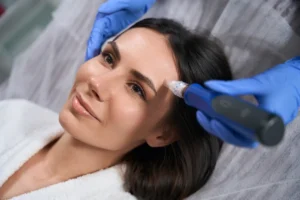
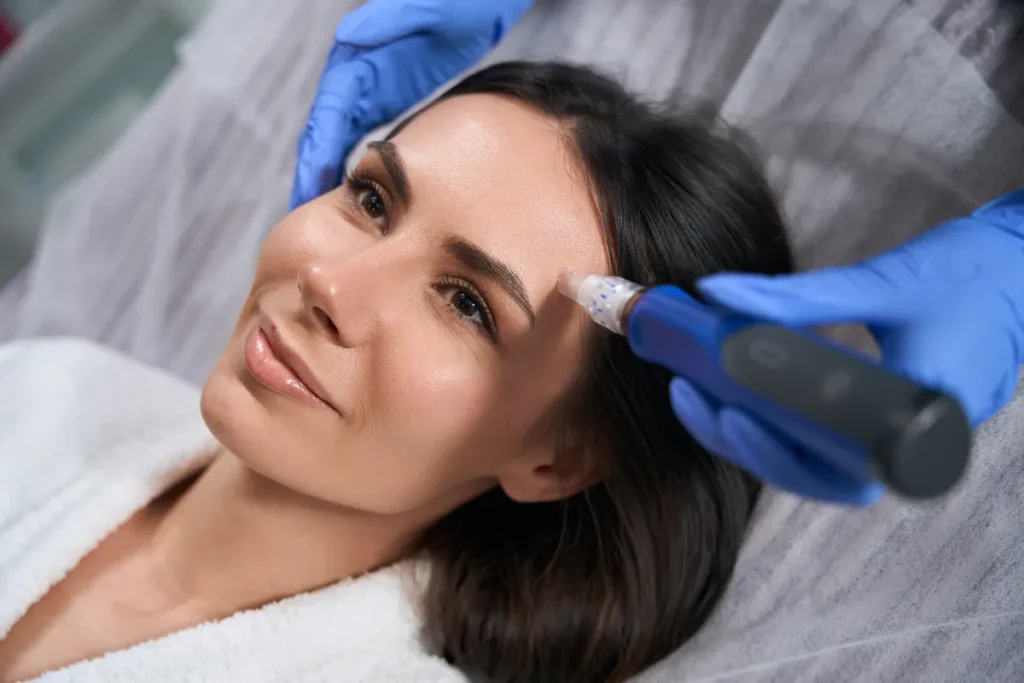
Microneedling (clinically known as collagen induction therapy) works by creating thousands of controlled micro-injuries in the skin, most commonly with SkinPen, the first FDA-cleared microneedling device in the United States. This triggers the body’s wound-healing response, which activates fibroblasts − the cells responsible for producing new collagen and elastin. The visible part of healing, like redness and flaking, wraps up within about a week. The part that actually changes your skin takes considerably longer, and understanding that distinction is the difference between realistic expectations and disappointment.
Days 1–3 − Redness, Tightness, Mild Swelling
For the first 24 to 72 hours, the skin typically resembles a moderate sunburn: noticeable redness, tightness, warmth to the touch, and mild swelling, particularly around the cheeks and under the eyes. This is most pronounced on day one and steadily eases by day 3. Tightness or mild itching is normal as the skin’s inflammatory response gets underway.
Days 4–7 − Surface Healing Completes
By day 4, most visible redness has settled into a light pink flush or resolved completely, depending on skin tone and treatment depth. Some clients notice fine, sandpaper-like texture or pinpoint dryness as the outer layer completes its renewal cycle. By day 7, the surface of the skin generally looks and feels healed to the naked eye.
Weeks 2–6 − Collagen Production Ramps Up
This is where the real work happens, largely out of sight. The micro-injuries created during treatment activate fibroblasts − the cells responsible for producing collagen and elastin, and this microneedling collagen production timeline extends well past the point where skin looks outwardly normal. Type III collagen forms first, gradually remodeling into more structurally durable Type I collagen over the following weeks. Texture and tone improvements from this stage tend to build gradually rather than appearing all at once.
Months 1–3 − Peak Firmness and Texture Improvement
General dermatological consensus places peak collagen remodeling from microneedling in the range of 4-12 weeks post-treatment, with continued, more gradual improvement for up to 6 months as new collagen matures and reorganizes. This is the window where clients typically notice the changes they booked the treatment for: smoother texture, more even tone, and firmer-feeling skin.
The Sommelier Team says: “The biggest misconception we see is that clients judge the treatment by how their skin looks on day 6 or 7. That’s the moment the surface has healed − it’s not the moment the treatment is finished working. The real transformation is happening underneath, over the following weeks, whether or not you can see it yet.”
How Long Is Downtime, Really?
This is the single most-searched question around microneedling downtime, and it deserves a specific answer rather than a reassuring one.
- First 24 hours. Skin is visibly red, tight, and warm. Avoid makeup, active skincare (retinoids, acids, Vitamin C), sweat-heavy exercise, and direct sun. Only a gentle cleanser and provided aftercare products should touch your skin.
- 24-72 hours. Redness fades, though mild residual pinkness or dry patches can linger through day three. Most people return to normal work and social activity in this window, though many still plan treatment around a weekend.
- Days 4-7. Makeup can typically be reintroduced once flaking has resolved and the skin barrier feels intact − usually day 4 or 5, sometimes day 7 for more sensitive skin. Normal skincare routines, aside from actives, generally resume by the end of week one.
Compared to deeper resurfacing options like aggressive chemical peels or ablative lasers, microneedling’s downtime is shorter and less dramatic, but “minimal downtime” still means several days of visible redness and a full week before skin looks and behaves normally.
When Will You See Results?
Clients often ask about the microneedling results timeline or, more simply, how long does microneedling take to work. Both questions, along with the microneedling collagen production timeline described above, point to the same underlying curve. Most clients notice an early, temporary radiance around day 5-7, once surface healing completes. More meaningful changes in texture, pore appearance, and tone evenness typically emerge between weeks 2-4, as early collagen remodeling begins to show. Peak results from a single session generally arrive between weeks 4-8. Because collagen continues to mature and reorganize for months afterward, many clients see continued, incremental improvement for up to 6 months following a session.
Why Sun Exposure Matters More Right After Treatment
Here’s the mechanism, stated plainly: freshly microneedled skin has a temporarily compromised barrier and heightened microneedling sun sensitivity. UV exposure during this window doesn’t just risk an uncomfortable sunburn − it raises the risk of post-inflammatory hyperpigmentation, often called PIH. These are dark or discolored patches that form when inflamed skin overproduces pigment in response to UV triggering during the healing window.
This risk isn’t evenly distributed. Clients with medium-to-deep skin tones are generally more prone to PIH after any inflammatory skin treatment, microneedling included, because melanocytes in deeper skin tones tend to react more strongly to inflammation. This is a real, specific risk − not a reason to avoid treatment, but a reason to take sun protection during the healing window seriously rather than treating “wear sunscreen” as a throwaway line. Strict, diligent SPF use (and physical sun avoidance where possible) for at least the first one to two weeks post-treatment is the actual safeguard here, not an afterthought.
If you’re specifically weighing microneedling against other options for treating existing discoloration, our guide on Microneedling vs. Chemical Peels for Hyperpigmentation breaks down how the two approaches compare for that specific concern.
The Real Reason Fall Timing Helps: Repairing Summer Sun Damage
This is where fall timing genuinely matters − as part of the broader conversation around microneedling and sun exposure. Many clients arrive in September and October in Forest Hills, Queens, and across New York City carrying a full season of cumulative UV exposure: fine lines, uneven tone, and sun spots that built up gradually over the summer. Microneedling for sun spots and microneedling for sun damaged skin work by stimulating collagen turnover and supporting a more even distribution of pigment as skin remodels. And because UV intensity is naturally lower in fall than in peak summer months, treating that damage now carries a comparatively lower risk of the sun-triggered PIH discussed above.
That’s the actual, mechanism-based case for the best time of year for microneedling being fall for many clients. The broader skin changes in autumn (cooler, less humid air, reduced UV index) support healing generally, but the sun-damage-repair angle is the piece that’s genuinely specific to this time of year. Framed this way, calling fall microneedling season isn’t marketing shorthand − it reflects a specific window when treating existing sun damage carries less added risk.
How Many Sessions Will You Need?
Clients often ask how many microneedling sessions are needed to see real change − the honest answer is a series, not a one-time treatment, since improvement comes from cumulative collagen remodeling rather than a single healing cycle. Most see a program of 3 to 6 sessions, spaced 4-6 weeks apart − enough time for the prior session’s collagen remodeling to progress before the next round of micro-injury begins, followed by periodic maintenance sessions to sustain results. At Skincare Sommelier, session plans are built around where your skin is starting from − sun damage, acne scarring, fine lines, or overall texture.
If you’re still deciding whether microneedling is the right investment at all, our broader guide, Is Microneedling Worth It in NYC?, covers that decision in more depth − this article stays focused on mechanics and timeline.
Frequently Asked Questions
Is fall actually the best time of year for microneedling, or is that just marketing?
Not exactly − healing works the same way regardless of season. What genuinely changes in fall is lower ambient UV, which reduces the risk of sun-triggered PIH, plus the fact that many clients arrive with summer sun damage worth treating. That's a real, specific advantage, not a blanket seasonal rule.
How long does microneedling downtime really last?
Expect visible redness for 24 to 72 hours, mild flaking through about day 3, and a full return to normal skincare and makeup by day 5-7.
Can microneedling help with sun spots from summer?
Yes. It stimulates collagen turnover and supports more even skin renewal, typically as part of a multi-session series rather than a single treatment.
What's the risk of hyperpigmentation after microneedling?
PIH is a real risk, particularly for medium-to-deep skin tones and with significant UV exposure during healing. Strict sun protection in the days and weeks after treatment is the main way this risk is managed.
How soon will I notice a difference after my first session?
A short-lived glow appears around day 5-7, genuine texture and tone changes begin around weeks 2-4, with peak results between weeks 4-8.
Healing timelines don’t change with the seasons, but your skin’s starting point often does, especially after a summer of sun exposure. If you’re weighing microneedling against other resurfacing options, our Notox RF Microneedling vs. Botox guide breaks down how the treatments compare, and our Forest Hills microneedling team can help you map out a session plan that fits where your skin is right now.