Consider the mornings spent shaving in the shower, the money spent on waxing appointments, and the razor bumps that appear just before a beach day. Laser hair removal begins to look less like an indulgence and more like a practical decision. What surprises most first-time patients is not the treatment itself but the schedule.
Smooth skin with laser is achieved over a series of visits. In this article, we explain how many sessions you are likely to need, what to expect after each round, approximate pricing, and why we encourage patients to start in the fall.
In brief: We perform every session on the Lumenis Splendor X. Sessions are spaced four weeks apart and can be extended to six weeks where appropriate. The number of sessions needed to start varies from person to person, and we refine the estimate after your first few treatments. Underarms take about ten minutes, full legs about an hour, and the goal is long-term hair reduction with occasional maintenance sessions.
What Laser Hair Removal Actually Does
Human hair continues to grow throughout life, much like nails. Laser treatment does not change that biology. Its purpose is to affect the follicle and reduce its ability to produce hair. When treatment is performed correctly and the full course is completed, the results are excellent.
This is also why it is described as permanent hair reduction rather than permanent removal. Most patients keep the majority of their results for years, with an occasional maintenance session when a few hairs return.
Why Treatment Is Done as a Series
Each hair follicle is on its own growth schedule. Follicles cycle through three phases:
- Anagen (growth): The hair is actively growing and attached to the follicle, and it contains the most pigment. This is the only phase in which the laser is fully effective.
- Catagen (transition): A brief intermediate phase.
- Telogen (rest): The old hair sheds, and the follicle rests before starting a new cycle.
At any given time, only a portion of your hair is in the growth phase. We treat that portion, and a few weeks later a new group of follicles has entered the growth phase and can be treated. For this reason, the timing of your appointments matters as much as the number of sessions.
When results seem to slow partway through a course, it is usually a matter of timing. A session was postponed, or the gap between visits grew longer than planned. This is common and easily corrected. Once the schedule is back on track, the next wave of hairs is treated and progress resumes.
— The Skincare Sommelier Team
How Many Sessions Will You Need?
The number of sessions varies from person to person. The American Academy of Dermatology notes that most people need several treatments. In our experience, many patients need roughly six to eight sessions to start with, though some need fewer and others need more. Several factors affect this:
- Treatment area. Underarms and bikini areas often respond quickly, while the face can take longer.
- Hair type. Dark, coarse hair responds best.
- Skin tone. Skin tone determines which settings are safe and how quickly we can increase them.
- Hormones. Conditions such as PCOS can stimulate new hair growth and may add sessions to your plan.
For this reason, when patients ask how many sessions they need, we provide a range on the first day and narrow it after observing how your hair responds to the first couple of rounds.
Spacing Your Sessions
We schedule sessions four weeks apart. Depending on the area and how your hair responds, the interval can be extended to six weeks. The table below shows our typical starting plan. Treatment counts are estimates and will be adjusted to your response.
| Area | Interval between sessions | Typical starting estimate |
| Face (upper lip, chin) | 4 weeks, may extend to 6 | 6 to 10 sessions |
| Underarms | 4 weeks, may extend to 6 | 5 to 7 sessions |
| Bikini and Brazilian | 4 weeks, may extend to 6 | 6 to 8 sessions |
| Legs, arms, back | 4 weeks, may extend to 6 | 6 to 8 sessions |
Laser Hair Removal Before and After, Session by Session
Here is a realistic progression, although every patient is different.
Sessions 1 and 2: shedding and the first smooth patches. One to three weeks after treatment, the treated hairs begin to fall out. This shedding can look like regrowth, and it often worries patients, but it is simply hair being pushed out of a follicle that has been treated. You may begin to notice small smooth patches.
Sessions 3 and 4: thinner, slower regrowth. Hair that grows back is finer, lighter, and slower. By this point, most patients find they are using a razor much less often.
Sessions 6 to 8: long-term reduction. Most of the treated area remains smooth, with only the occasional fine hair. These are the results most patients have in mind when they first book.
Results by Area
- Brazilian. One of our most popular treatments. It reduces ingrown hairs and razor bumps in a very sensitive area. Sessions usually take 15 to 20 minutes.
- Underarms. Quick and effective, and often the first area patients try before treating others.
- Face. The upper lip and chin respond well. Hormone-driven hair may require maintenance over time.
- Legs. This area saves the most time overall. Full legs take longer per session, and you will no longer need to shave them.
- Men. Men make up a larger share of our patients than most people expect. Common areas include the beard line, the back of the neck, and the back and chest. Thick, dark hair tends to respond very well.
Why We Recommend Starting in October
The calendar makes a strong case for an October start:
- Less sun exposure. Tanned skin absorbs more laser energy, which raises the risk of burns and pigment changes. Treatment in late fall and winter is gentler on your skin.
- Better timing. A full course typically takes from about six months at the shorter end to a year at the longer end, depending on the area, the number of sessions, and the spacing. Starting in October allows much of that time to fall in the cooler months.
- Less pressure. Long sleeves and tights make the in-between weeks, when you cannot wax, much easier to manage.
Can you do laser hair removal in summer? Yes, as long as you are strict about sun protection and avoid tanning. However, sessions often need to be paused after a vacation, so fall is generally smoother. We explain the same seasonal reasoning for skin treatments in our article on microneedling in the fall.
How to Prepare for Your First Session
- Shave the night before or the morning of your appointment. We want the root beneath the skin, not long hair on top of it. Long hair absorbs heat and makes the treatment more uncomfortable.
- Stop waxing and tweezing about four weeks beforehand. These methods remove the root we are trying to treat.
- Avoid sun exposure and bronzer for a couple of weeks. Even a light tan requires us to lower the settings.
- Bring a list of your medications. Some antibiotics, acne medications, and supplements can make skin sensitive to light.
- Arrive with clean skin. Do not apply deodorant, lotion, or makeup to the treatment area.
What Happens During a Session
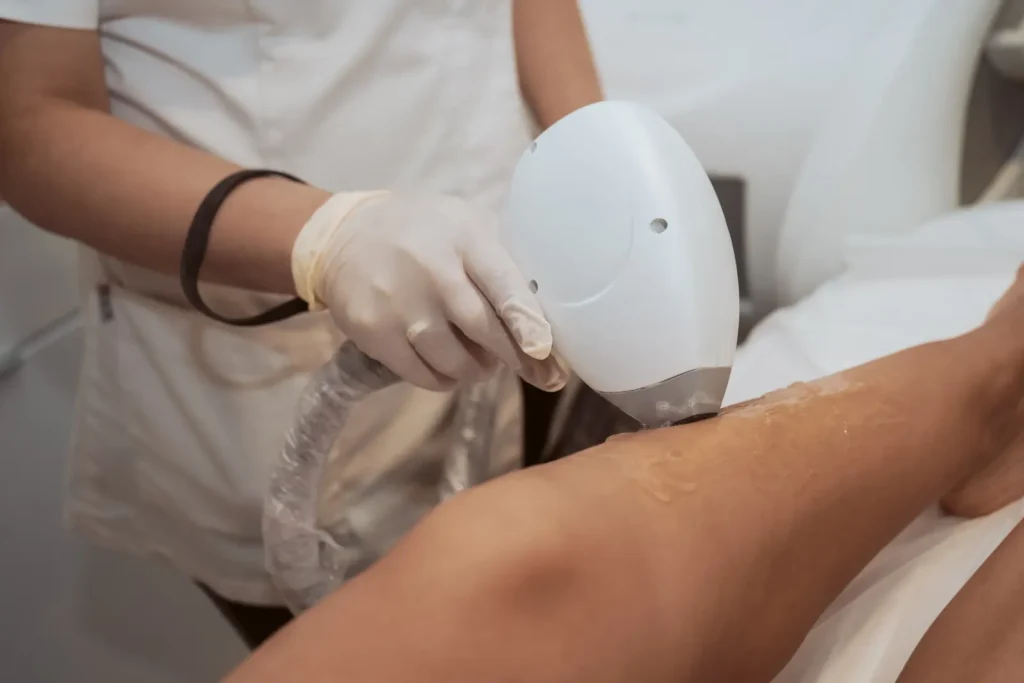
We begin by examining your skin and hair under good lighting and selecting your settings. You will wear protective goggles. The specialist then moves the Splendor X handpiece over the area in rows. The handpiece has a cooling tip, and a soothing gel may be applied at the end. Treatment of small areas takes only a few minutes.
Does It Hurt?
Most patients describe a quick snap, similar to a rubber band against the skin, followed by a sensation of warmth. The bikini line and upper lip are usually the most sensitive. The built-in cooling of the Splendor X makes a significant difference to comfort, and sessions on smaller areas are over in minutes.
What About Deeper Skin Tones?
With the right device, laser hair removal works well on deeper skin tones. Many older lasers struggled with Fitzpatrick skin types IV to VI because they could not reliably distinguish the pigment in the hair from the pigment in the surrounding skin.
At Skincare Sommelier we use the Lumenis Splendor X, which combines two wavelengths: Alexandrite (755 nm) and Nd:YAG (1064 nm). For patients with deeper skin tones, we rely on the Nd:YAG wavelength, which is generally considered the safer choice. Settings are adjusted for each patient individually, and we never use a single preset for everyone.
Is It Permanent?
The accurate term is permanent hair reduction. Not every hair is removed for life, but the treatment works over the long term. Most of our patients keep the majority of their results for years, with an occasional touch-up once or twice a year if a few hairs return.
One limitation is important: the laser targets pigment. Platinum blond, gray, white, and red hairs often respond poorly or not at all.
Cost
The price of laser hair removal depends mainly on the size of the area and the number of sessions required. The cost per visit is lower for small areas such as the upper lip or underarms and higher for full legs or the full body. Purchasing a package reduces the price per visit considerably. Our current packages are listed on our laser hair removal page.
Laser Hair Removal vs Waxing
| Laser | Waxing | |
| Effect on the follicle | Targets the follicle to reduce its ability to produce hair | Removes the hair but does not affect the follicle, which keeps producing hair |
| How long results last | Years, after a full course | 3 to 6 weeks |
| Ingrown hairs | Greatly reduced | Common |
| Discomfort | Quick snaps, with cooling | Pulling at every visit |
| Long-term cost | One course plus occasional touch-ups | Ongoing, indefinitely |
The comparison depends on how far ahead you are looking. Waxing costs less this month, but laser is usually less expensive over the next five years.
Side Effects and Aftercare
Most side effects are mild. You may notice some redness and small bumps around each follicle that resemble goosebumps. These usually settle within a few hours to a day. Rarely, pigment changes or blistering can occur, and these are most often related to a tan or to settings that were not appropriate for the skin. If anything looks unusual in the days after a visit, please contact us so we can examine it.
Aftercare is simple:
- Apply SPF 50 to the treated area daily.
- Avoid sunbathing, tanning beds, and self-tanner for two weeks before and after each session.
- Do not wax or tweeze between sessions. Shaving is fine.
- Avoid hot baths, saunas, and intense exercise for a day.
Reviews
What Our Clients Say About Laser Hair Removal
4.9 Rating · 128 reviews Google 4.9
Jennifer R.
Apr 2026
I’ve had such an amazing experience at Skincare Sommelier Beauty Lab & Med Spa! I’ve been going there for laser hair removal (Brazilian and full legs), and the results have been incredible — it truly works. The staff is always so warm, welcoming, and professional, which makes every visit comfortable. The space is also spotless and beautifully maintained, which I really appreciate. …
Valentina S.
Oct 2026
I’m very happy with my laser hair removal experience! The service is excellent, and the results have been great. The girl who does my treatments is very professional, friendly, and always makes me feel comfortable. She takes her time and does a really good job. I definitely recommend this place!
Hailey Q.
Mar 2026
I had the best experience with Halyna for laser hair removal! From the very beginning, she made me feel so comfortable and explained the entire process in detail. She’s extremely professional, gentle, and knowledgeable. The treatment was quick and way less painful than I expected. After just a few sessions, I’ve already noticed such a big difference — slower growth and smoother skin. Her space is clean, welcoming, and very calming. …
Miguel R.
May 2026
Did full body laser hair removal including intimate laser. Way easier than I thought, basically painless and you can feel the cooling which helps a lot. Halyna laser tech was great, professional quick and thorough. Place is clean. 4 sessions in and already seeing results. I have a higher skin tone too and it’s been completely safe. Would recommend.
Frequently Asked Questions
Can I shave between sessions?
Yes. We recommend it, because shaving leaves the follicle intact for the next treatment. Avoid waxing and plucking.
Why is hair still growing after my third session?
Those are follicles that were resting during your earlier sessions. They will be treated as they enter the growth phase.
What if I want to start in July?
You can, provided you are very careful about sun protection on the treatment area. Fall and winter are generally easier.
Will it work on blond or gray hair?
Laser works best on darker hair because it needs pigment to target. For very light or gray hair, we will explain candidly at your consultation what result to expect.
How much time should I block out?
About ten minutes for small areas and up to an hour for larger areas such as full legs.
Why are sessions spaced four weeks apart?
Four weeks allows enough time for a new group of follicles to enter the growth phase so that they can be treated. If your hair responds slowly, we may extend the interval to six weeks.
Can sessions be spaced further than six weeks?
We do not recommend it. Longer gaps can slow progress because treatment is no longer aligned with the growth cycle. If you need to reschedule, contact us and we will adjust your plan.
Why does the number of sessions differ between people?
Hair color and thickness, skin tone, treatment area, and hormonal factors all play a role. We give you an initial estimate and refine it as we see how your hair responds.
Will my hair grow back?
Hair grows throughout life, much like nails, so some growth may return over time. The treatment reduces the follicle’s ability to produce hair, and after a full course, most patients see a substantial and lasting reduction. Occasional maintenance sessions can address any remaining hairs.
Is laser hair removal safe?
When performed by trained professionals using appropriate devices and settings for your skin, it is considered safe. Side effects are usually mild and temporary.
Can I have laser hair removal if I am pregnant?
We generally recommend waiting until after pregnancy and breastfeeding. Please tell us if you are pregnant or may be pregnant.
Should I stop shaving before my appointment?
No. You should shave beforehand, ideally the night before or the morning of your visit. Do not wax or tweeze.
Can I wear makeup or deodorant to my appointment?
Please arrive with clean skin. Deodorant, lotion, and makeup should be removed from the treatment area first.
Can laser treat ingrown hairs and razor bumps?
Yes. Many patients see fewer ingrown hairs and less razor irritation as hair becomes finer and sparser.
Can I combine laser hair removal with other treatments?
Often, yes, but timing matters. Ask your provider before starting other treatments such as peels or tanning products.
What happens if I get a tan during my course?
Please let us know. A tan increases the risk of burns and pigment changes, so we may need to reduce the settings or postpone your session.
Planning Your Start Date
Successful laser hair removal depends on three things: the right device for your skin, the right spacing, and completing the full course. For us, that device is the Lumenis Splendor X, and starting in the fall means more of your sessions fall in the low-sun months.
If your “laser hair removal near me” searches keep returning large NYC chains, a smaller med spa may suit you better. Many of our Queens patients appreciate that sessions are short and easy to fit around work, and our Forest Hills location offers early-morning and late-day appointments.
A simple way to begin is to book your consultation this month and plan your first session for October or November. At that visit, we will examine your skin, your hair, and the area to be treated, and we will give you a realistic estimate of how many sessions you will need and when your course is likely to finish. Our Forest Hills laser hair removal team will assess your skin and hair type and schedule every session for you, so all you have to do is show up.