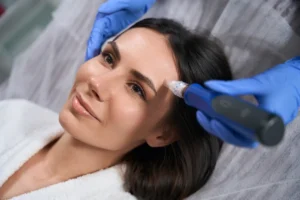

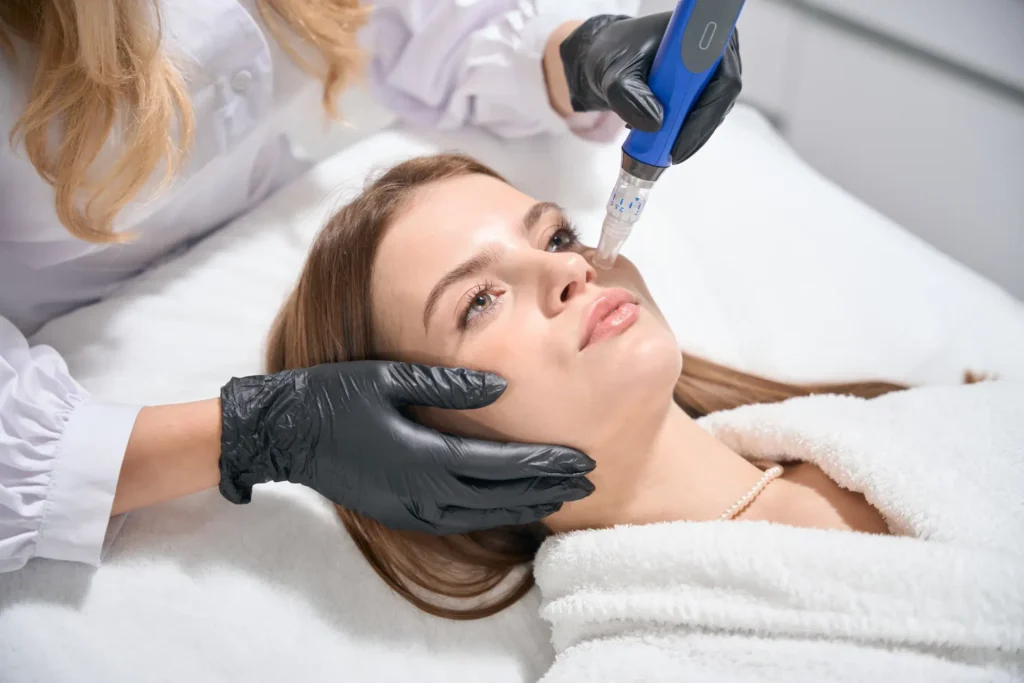
Many clients pause their advanced aesthetic protocols when the weather gets warm. But surprisingly, getting microneedling in the summer can be a great way to address sun damage directly — that is, if you’re using the right equipment and taking good care of your skin afterward. People in Forest Hills, Kew Gardens, and throughout Queens who maintain consistent aesthetic routines year-round often avoid certain procedures in summer as a precaution. The truth is, when performed by a trained medical professional using devices like SkinPen or Sylfirm X RF Microneedling, there’s little reason to pause.
Table of Contents (Microneedling in the Summer)
Quick Answer: Is Microneedling Safe in Summer?
Summer microneedling is safe when performed with FDA-cleared devices and when paired with strict UV compliance. Unlike resurfacing lasers that remove the top layer of skin and make skin react more strongly to light, both SkinPen and Sylfirm X RF Microneedling keep the epidermis intact. With the epidermal barrier intact, treatments remain manageable even during peak UV months. As a requirement, individuals must apply SPF 50+ sunscreen after microneedling. By applying this daily and avoiding sun exposure for 7–10 days after the procedure, the skin remains protected. The treatment is available throughout the year.
Why Summer Doesn’t Have to Mean a Break from Microneedling?
The skin benefits of microneedling — collagen induction, improved texture, reduction of sun spots, and treatment of acne scarring — do not need to be suspended for three to four months each year. The myth that microneedling in the summer causes hyperpigmentation stems from generalizing older, less precise technologies onto modern, medically supervised treatments. Learn more about microneedling benefits for skin in our dedicated article.
Sun damage is a year-round concern in an urban environment like New York City, where UV radiation reflects off glass, concrete, and pavement even on overcast days. Treating existing sun spots and photo-aged tissue proactively (rather than waiting until fall) supports long-term skin health outcomes.
Let’s also not forget that microneedling is done year round in warm sunny climates such as Spain, Italy, South and Latin America, and so on.
When it comes to microneedling as well as many peels, it is not the time of year that defines the outcome, but the right approach, technique and expertise.
Sommelier team says: “It’s a myth that you need to put your skin care on pause during the summer — at least, not anymore. Today’s clinical devices let us work safely year-round. Instead of aggressively peeling the skin’s surface, we use deep dermal remodeling. This helps address early signs of sun damage before they become more pronounced. ”
SkinPen vs. Sylfirm X: Choosing the Right Technology for Summer Skin
Choosing the right modality ensures a safe summer treatment. At our clinical space, we utilize two of the industry’s most sophisticated, FDA-cleared platforms, each engineered to deliver deep dermal improvements with minimal surface disruption.
Microneedling with SkinPen: Mechanical Precision for Surface Renewal
In the United States, SkinPen Microneedling is the first microneedling device to receive FDA clearance. With precise control, sterile needles create small channels in the dermis — this action causes the body to produce collagen and elastin — but the process does not use heat or chemicals to disturb the epidermis. Because the skin’s outer barrier remains intact, it is less sensitive to light after the procedure than after resurfacing laser treatments. SkinPen is effective for changing skin texture. Also, it is an excellent option for addressing textural concerns, making it a go-to choice for microneedling enlarged pores, surface texture, and acne scars. For most people, the time required for the skin to recover is between 24 and 48 hours.
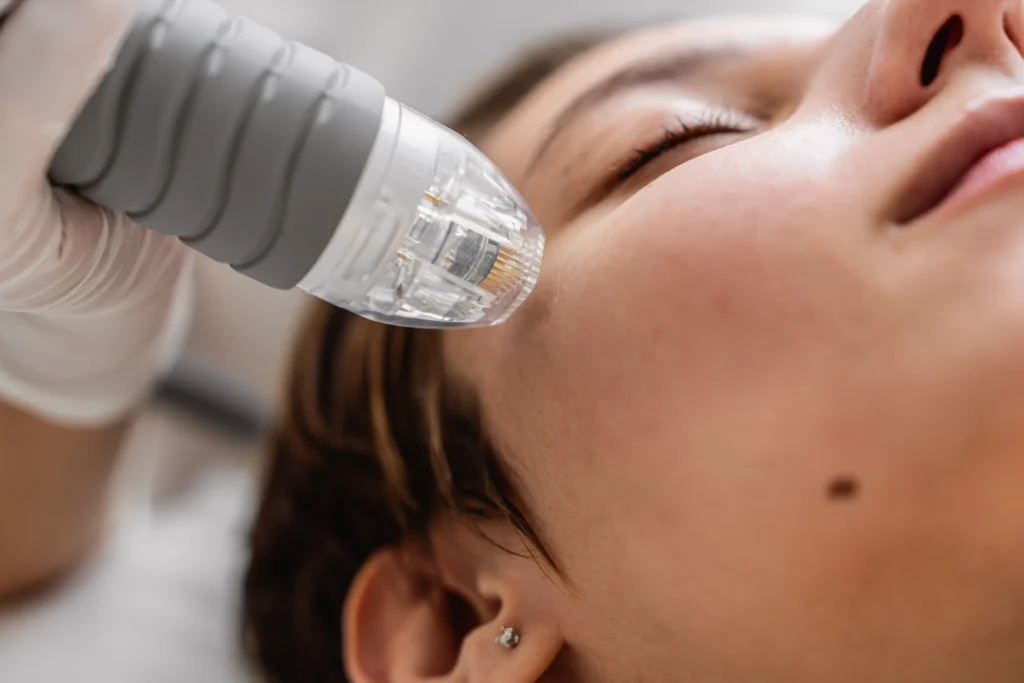
Sylfirm X RF Microneedling: Deep-Layer Treatment Without Epidermal Risk
RF Microneedling (Sylfirm X) employs a proprietary dual-wave radiofrequency platform — with both pulsed and continuous-wave settings — to deliver heat precisely to the deeper layers of your skin while keeping the outer layer safe. This way of protecting the epidermis makes Sylfirm X a top choice for summer treatments, especially for hyperpigmentation-prone skin. By specifically targeting abnormal vasculature and melanin clusters, it effectively treats microneedling for sun spots, melasma, and Post-Inflammatory Hyperpigmentation (PIH) without worsening existing pigmentation concerns.
An important factor to consider that both SkinPen and Sylfirm X treatments are finalized with Salmon DNA or Exosomes topical boosters, and both in their core are anti-inflammatory and restorative.
| Feature | SkinPen | Sylfirm X |
|---|---|---|
| Technology | Microneedling (SkinPen) | RF Microneedling (Sylfirm X) |
| Treatment depth | 0.25–2.5 mm (adjustable) | Up to 3.5 mm |
| Epidermal impact | Minimal | Minimal |
| Primary concerns | Texture, pores, fine lines, mild scars | Melasma, rosacea, sun damage, skin laxity |
| Summer safety | Very high | Very high (ideal for pigmentation) |
| Downtime | 24–48 hours of redness | 24–72 hours of mild redness |
| Fitzpatrick suitability | I–VI (Safe for all skin tones) | I–VI (Safe for all skin tones) |
Preparing for Microneedling in the Summer: What to Do Before Your Appointment
Proper preparation is just as important as the microneedling procedure itself:
- Avoid scheduling microneedling after sun exposure or a beach holiday. If your skin is sunburned or shows noticeable UV-related redness, the treatment should be postponed to prevent deeper tissue injury.
- Stop using self-tanning products at least two weeks before your appointment and avoid spray tans during this period.
- Discontinue retinoids as well as exfoliating acids 5–7 days prior to the procedure. Maintain skin hydration with a gentle, fragrance-free moisturizer in the days leading up to the procedure.
- Inform your practitioner about any recent sun exposure, skin irritation, heat rash, or inflammation, as these conditions may require rescheduling.
Post-Care in the Heat: Navigating NYC Summer After Microneedling
Sommelier team says: “Post-procedure care in NYC is uniquely demanding. We remind our Forest Hills and Queens clients that the subway, humid gyms, and city heat increase bacterial exposure on freshly treated skin. Plan your treatment around your schedule — avoid high-activity days for at least 48 hours.”
During the first 24–48 hours, refrain from using the subway, going to the gym, practicing hot yoga, or engaging in any activity that leads to heavy sweating. Perspiration on freshly treated micro-channels can increase the risk of infection and may contribute to post-inflammatory hyperpigmentation. From day 2 through day 7, apply a broad-spectrum mineral sunscreen with either zinc oxide or titanium dioxide each morning. If you spend time outdoors, reapply it every two hours. In the initial healing phase, it’s best to avoid chemical sunscreen products. As for active skincare ingredients, pause the use of retinoids, vitamin C, AHAs, and BHAs for approximately 5–7 days. Instead, focus on gentle, hydrating cleansers and fragrance-free moisturizers to help the skin recover comfortably.
While strict UV protection and avoiding extreme heat will prevent new dark spots during your recovery, you may still be looking for ways to treat existing sun damage. Explore our comprehensive guide on “Microneedling vs. Chemical Peels for Hyperpigmentation” to see which treatment aligns with your goals.
FAQ: Microneedling in the Summer — Real Questions Answered
How soon after microneedling can I be in the sun?
Avoid direct sun exposure for at least 7 days post-treatment. You must prevent direct sunlight from reaching your skin without protection. When heading outdoors after your session, make sure to protect your skin with a mineral SPF 50 sunscreen.
Is RF microneedling safer than regular microneedling in the summer?
Sylfirm X RF Microneedling offers a meaningful clinical advantage for people whose skin tends to get dark spots. Its dual-wave radiofrequency sends energy deep into the dermis while avoiding the outer skin layer, which is most susceptible to UV-induced concerns. For clients with Fitzpatrick skin types IV–VI, Sylfirm X is the better, safer choice for summer.
Can microneedling make sun damage worse?
Not if performed correctly and followed by strict UV protection. In fact, microneedling for sun spots is a clinically validated application — it accelerates turnover and breaks up superficial pigmentation. Without proper sunscreen after microneedling, however, treated skin is temporarily more susceptible to new UV-induced pigmentation.
How long after microneedling can I go to the gym?
You should refrain from strenuous exercise, heavy sweating, and exposure to gym environments for at least 48 hours.
What sunscreen should I use after microneedling?
You should pick a mineral-based, fragrance-free sunscreen with SPF 50+ that contains zinc oxide and/or titanium dioxide. In the time right after your treatment, avoid sunscreens with chemical UV filters, as they can irritate sensitive skin. Remember to reapply it every two hours if you’re outside.
Experience Microneedling in the Summer at Skincare Sommelier in Forest Hills, Queens
Skincare Sommelier is a medical aesthetic office located in Forest Hills, Queens, and it provides services to people throughout New York City. Our protocols for SkinPen Microneedling and Sylfirm X RF Microneedling include comprehensive Fitzpatrick scale assessment and seasonal UV planning — ensuring that your summer treatments are as safe as they are effective, whether you are addressing melasma, sun spots, acne scarring, or enlarged pores.
Schedule a personalized consultation at Skincare Sommelier in Forest Hills today. During your consultation, our clinical team will evaluate your skin tone, concerns, and summer lifestyle to determine whether SkinPen or Sylfirm X is right for you — and build a protocol designed to protect your results under the NYC sun.