

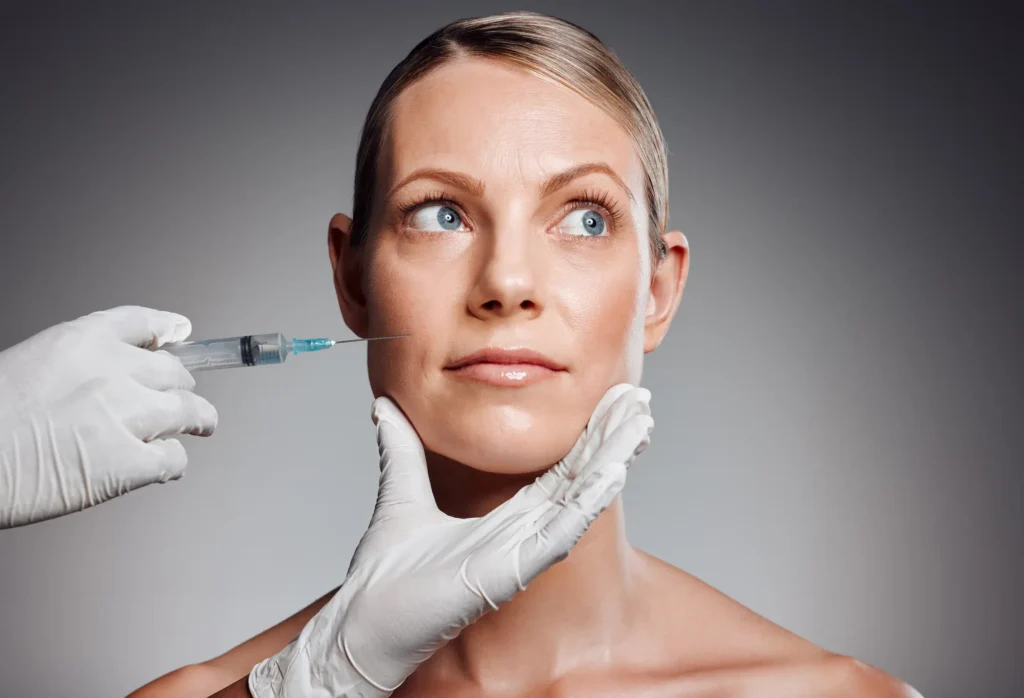
If you’ve been looking into Sculptra and stumbled across scary stories online — lumps, “ruined faces,” permanent complications — it’s completely understandable to feel nervous. But here’s the truth: those stories almost always involve one thing in common. A provider who didn’t follow the right protocols.
Sculptra is one of the most effective, long-lasting treatments available today for restoring volume and improving skin quality. And when it’s done correctly, the results are natural, gradual, and beautiful. This article will help you understand exactly what Sculptra does, who it’s for, and what to look for when choosing a clinic — so you can make a confident, informed decision.
What Is Sculptra and What Does It Actually Do?
Sculptra is an injectable biostimulator made from poly-L-lactic acid (PLLA) — a substance that has been safely used in medicine for decades (think dissolvable sutures). Unlike traditional fillers that add immediate volume, Sculptra works with your body to gradually stimulate your own collagen production.
That means the results don’t appear overnight. Instead, over the course of Sculptra Treatment, your skin becomes firmer, fuller, and more youthful.
Does Sculptra Add Volume or Just Improve Skin Quality?
Both. This is one of the most common questions, and the answer is: it depends on how it’s used.
- In a more diluted form, Sculptra is excellent for improving overall skin quality — texture, firmness, fine lines. It’s a deep collagen boost.
- In targeted areas, Sculptra can also restore meaningful volume — lifting cheeks, defining the jawline, or adding fullness where it’s been lost over time.
- The treatment can also be performed on the body — including the abdomen and buttocks — for skin tightening and mild volumizing effects.
Read more: How Sculptra can transform your Hip Dips and bring uou a natural body curves.
Who Is Sculptra For?
Sculptra works beautifully for people who:
- Want gradual, natural-looking results rather than an instant transformation.
- Are starting to notice volume loss in the cheeks, temples, or jawline.
- Want to improve overall skin quality: firmness, texture, radiance.
- Are looking for a longer-lasting solution: results can last up to 2 years.
- Prefer to avoid the “filled” and “overfilled” look that some traditional fillers can create.
It’s a particularly popular choice for clients who want results that look like they’ve simply aged beautifully.

How Many Sessions Does Sculptra Require?
A typical treatment plan involves 2-3 sessions, spaced about 4-6 weeks apart. After that, results continue to develop over 3-6 months as your body produces new collagen. Many clients return for a maintenance session once a year to keep their results looking their best.
Which Areas of the Body Can Be Treated with Sculptra?
Sculptra is FDA-approved for facial treatments and is also widely used off-label for body contouring. Common treatment areas include:
- Face: cheeks, temples, jawline, chin, lower face.
- Décolleté and neck: for skin tightening and texture improvement.
- Abdomen: to improve skin laxity after weight loss or pregnancy.
- Buttocks: as a non-surgical alternative to a BBL (Brazilian Butt Lift).
- Inner arms and thighs: for crepey or lax skin.
Can Sculptra Go Wrong?
Yes, but it’s important to understand that complications are almost always linked to how the treatment is administered, not to the product itself.
The most common issues that arise include:
- Small nodules or lumps under the skin (usually temporary and preventable).
- Uneven results from improper placement.
- Results that are too subtle or take longer than expected.
The good news? Most of these points are avoidable when your provider follows proper protocols, and at Skincare Sommelier, we don’t cut corners.
Sommelier team says: “Every client at Skincare Sommelier Beauty Lab & Med Spa in Forest Hills goes through a thorough facial assessment before we prepare a single syringe. Our placement technique and precise protocols are what make the difference between a result you’ll love and one that causes concern.”
Can You Be Allergic to Sculptra?
Allergic reactions to Sculptra are very rare. Poly-L-lactic acid is a biocompatible material that has been used in medicine for many years and is generally very well tolerated by the body.
That said, some clients may experience:
- Temporary redness, swelling, or tenderness at the injection site.
- Minor bruising (normal with any injectable).
- In rare cases: prolonged redness, itching, or a rash.
If you notice unusual swelling, persistent itching, or difficulty breathing after any injectable treatment, seek medical attention right away. Before your appointment, let your provider know about any allergies or sensitivities you have. A proper consultation makes all the difference.

Can Sculptra Be Dissolved If I Don’t Like the Results?
This is one of the most important things to understand before choosing Sculptra: unlike hyaluronic acid fillers, Sculptra cannot be dissolved. It doesn’t work that way, because it’s not a standard filler that fills the space. Sculptra is a collagen stimulator.
This is exactly why choosing the right provider matters when it comes to Sculptra. You want someone who takes the time to understand your goals, places the product correctly, and knows how to achieve natural results.
If a small nodule does develop, there are management options, and with time and proper aftercare, many early concerns resolve on their own. But prevention is always better than correction.
Sommelier team says: “We never rush this process. Every client leaves our Forest Hills clinic with clear aftercare instructions — including the ‘Rule of 5’ massage protocol — because what you do in the first five days after treatment matters just as much as the procedure itself.”
One Thing Every Sculptra Client Must Know: The Rule of 5
After your Sculptra session, you’ll be asked to massage the treated areas for 5 minutes, 5 times a day, for 5 days – it’s the Rule of 5. This simple step helps distribute the product evenly and significantly reduces the chance of any lumping. It takes less than half an hour a day and makes a real difference.
Why Choose Skincare Sommelier for Sculptra in NYC?
At Skincare Sommelier Beauty Lab & Med Spa in Forest Hills, New York, Sculptra is one of our most requested treatments — and we’ve built our entire approach around doing it right.
- Every client receives a personalized anatomical assessment before treatment.
- We follow strict reconstitution protocols to ensure the product is always properly prepared.
- Our injectors are trained in deep-plane placement technique for precise, safe results.
- We take the time to understand your goals and build a realistic treatment plan.
- Aftercare support and follow-up visits are a standard part of every client’s experience.
Whether you’re interested in facial rejuvenation or body treatments, our team will walk you through everything — so you know exactly what to expect, step by step.
FAQ: Real Answers About Sculptra
Is it normal to feel lumps immediately after Sculptra?
Yes, minor unevenness or slight swelling in the first few days is common and usually temporary. With proper massage, it typically resolves on its own.
How long does it take to see results?
Results develop gradually over 3–6 months as your body builds new collagen. Most clients start noticing a difference after their second session.
How long do Sculptra results last?
Results can last up to 2 years. Annual maintenance sessions are recommended to sustain the effect.
Is Sculptra better than filler?
They serve different purposes. Fillers provide immediate volume and are reversible. Sculptra works gradually by stimulating your own collagen and tends to look more natural over time. Many clients use both, depending on their goals. Our team can help you decide what’s right for you.
Can Sculptra be used on the body?
Yes. Sculptra is increasingly popular for body treatments, including the abdomen, buttocks, and other areas where skin laxity is a concern. Ask about our body contouring options during your consultation.
Who is not a good candidate for Sculptra?
Sculptra is not recommended during pregnancy or breastfeeding, or for those with certain autoimmune conditions. A consultation allows us to review your medical history and confirm whether Sculptra is appropriate for you.
If you’re curious whether Sculptra is the right choice for you, the best first step is a conversation. Our team at Skincare Sommelier Beauty Lab & Med Spa in Forest Hills, New York will take the time to understand your goals, assess your anatomy, and give you an honest, personalized recommendation.